Saturday, February 25, 2017

The 5 Reasons Why We Still See Security Wearing Wired Security Earpieces

Advancement in technology has changed the form of how electronic devices look like, how they operate and consequently how we handle them. Devices such as radios have become smaller, lighter and wireless. The advent of Bluetooth has enabled radios to connect without any physical connections; notably saving us from the fuss of tangled and visible wires. The wireless earpieces are in use, but it is important to note that they have not completely taken over from the wired covert earpieces. With the convenience and technological advancement they offer, why is it that they have not replaced their wired counterparts especially in fields of operation? Here are a few thoughts:

Reliability

Wireless earpieces are not as reliable as the wired ones. The technology that supports Bluetooth communication has it that the source device (radio) and the receiving device (earpiece) have to be at a certain distance from each other and nothing should come in between the path of transmission of the two devices. This means that if any of the two requirements are not as anticipated, functionality is compromised. Wired earpieces do not have the complication of interference and limited bandwidth. When you are in a situation where reliability is crucial, where you cannot afford to lose connection, say you are out in the field on operation, it would make sense to use wired covert earpieces as they are easy to handle, making them more reliable.

Limited Operational Lifetime


For a wireless device to be operational, it needs to be charged. When out on assignment, the crew will need to ensure that they have fully charged the wireless earphones and carried a fully-charged extra battery. The batteries work on a limited operational lifetime which burdens the crew as they have to keep replacing the batteries every time. When packing batteries for replacement, one should pack enough to cater for both the radio and earphone. This is not the case with the wired pieces. For wired pieces, the crew only has to worry about a single cable that will connect the radio to the earphones. The wired option is therefore less of a burden to handle than the wireless ones.

Necessary Visibility

In some instances, the visibility of the wires, which the wireless earpieces work against, is crucial in making a statement. In a security situation, the wired pieces are visible to the human eye; they make the public aware of the security. The visibility in itself reinforces security, deterring any harmful or criminal practices that may take place. In such a situation, wireless pieces are of no use as no security statement will be made.

Disruption and Negative Interference

Wireless earpieces are vulnerable to signal disruption and negative interference. It is possible for a wireless-transmitted signal to be compromised- an activity that may cause threats and anomalies. A signal transmitted by wireless means may be decrypted and accessed by unauthorized people. At the same time, the signal may be compromised in a way the end product that is received as sound is not what was initially transmitted. Bluetooth is open to any form of interference, be it purposeful or accidental. The wired radio earpiece on the other hand greatly reduce the possibility of such malpractices as it would be hard to physically interfere with transmission without anyone noticing.

Misplacing earpieces during an incident

In the event of an incident, it would be hard to misplace a wired radio earpiece. This is because, when an agent is on the move or if they make any vigorous movements, the radio earpiece might be detached from the ear but will not fall; it is tethered to the radio using the wire. On the other hand, a Bluetooth earpiece would probably detach itself from the ear, fall down and be misplaced as it has no physical tethering to the radio device. This will cost an agent a lot of time in looking for a misplaced device and even the responsibility of a lost device.

When it comes to technology, the feature advancements are normally made to our convenience and efficiency but in some cases, the old way of doing things would prove to be better. Wired security earpieces have major advantages over their wireless counterparts, making them hard to phase out. What the wireless earpieces can function as at this point is as a complimentary device to the wired one.

2016 year in review: Motorola's resurgence

Motorola have always been a brand we have looked up to, in our eyes they produce some of the best equipment on the market, sometimes they don’t sell as well as they should do. The business has been split and sold several times over the last year, but they are now on the rise and business is going well, as this article shows.

2014 saw Motorola’s ownership change hands from the west to the east. Lenovo acquired the company off Google on January 29, 2014 but it was not until 2016 that the fruits of Lenovo’s ownership started showing up.

The year started off with Motorola in a slightly vulnerable position with the relative failure of both the Moto X Style and Moto X Play. The Moto X line was fading and even the third generation Moto G had failed to impress.

These first devices under Lenovo’s ownership however, had been in the pipeline much before Lenovo took over and it was not until the Moto G4 and the Moto Z in 2016 that we saw what the new Motorola could deliver.

Moto G4 series: Ushering in a renaissance

The Moto G4 Plus was one of two variants of Motorola's fourth generation Moto G, the firm's bestselling smartphone range ever. This was the first time Motorola (now owned by Lenovo) launched more than one smartphone in the G range, with the Moto G4, Moto G4 Play and the Moto G4 Plus.

At a starting price of Rs 13,499, the Moto G4 Plus made for a compelling buy, and continued the G series of smartphone's tradition of providing good smartphones at an affordable price. With a superb display, a fast and accurate fingerprint sensor, stock android and great performance, it ticked all the right boxes for a mid-range device.


In comparison to the regular Moto G4, the Moto G4 Plus featured an improved 16MP rear camera with phase auto detection, laser autofocus and a dual LED Flash and also came with a fingerprint sensor.

Motorola also released the Moto G4 Play which was the cheapest device in the G4 lineup at Rs 8,999 and packed a 5-inch 720p HD display, a 2,800mAh battery, 2GB of RAM and 16GB of expandable internal storage.

The Moto G4, G4 Plus and G4 Play were critical as well as commercial hits and announced the comeback of Motorola in the smartphone game. The Plus in particular, presented a fantastic blend of features and affordability that saw it shoot up the sales charts.

Moto E3 Power: The odd one out

Lenovo also unveiled the Moto E3 Power in India which was a more powerful version of the third generation Moto E3. In a surprising move, the company decided against releasing the regular Moto E3 in the country.

The Moto E3 Power came with a massive 3,500mAh battery, 2GB of RAM, a 5-inch HD display and nearly stock Android Marshmallow.

At Rs 7,999, the Moto E3 Power found itself in as odd situation with the much more capable Moto G4 Play priced at just a thousand rupees more.

The attack of the Modular smartphones

Motorola then cemented its position in the smartphone world by releasing the striking Moto Z, the company’s most exciting smartphone in years.

The Moto Z came packed to the gills with a Qualcomm Snapdragon 820 SoC, 4GB of RAM, a 13MP rear camera with OIS and 4K recording, a 5MP front shooter and a 2,600mAh battery along with TurboCharging support.

The ‘World's thinnest premium smartphone’ came with a 5.5-inch QuadHD display protected by corning gorilla glass, a sleek and suave metal/glass body and unlimited feature expansion through the Moto Mods.


The distinguishing feature of the Moto Z were the ‘Moto Mods’: snap-on accessories that could be attached to the back of smartphone through magnets in order to increase its functionality.

Alongside the flagship Moto Z, Motorola also launched its younger brother, the Moto Z Play which came with a 5.5-inch 1080p Super AMOLED display, a downgrade from the QuadHD resolution of the Moto Z and the largest battery Motorola ever put in any of its smartphones. Just like the Moto Z, the Moto Z Play also supported the innovative Moto Mods.

The Moto Z and Moto Z Play helped bring Motorola back into the spotlight. The Moto Mods in particular were greatly appreciated and were hailed as one of the best implementations of the modular concept in recent years.

The stunning all-metal Moto M

The end of the year saw Motorola launching the stunning all-metal Moto M in India.

The Moto M’s full metal unibody design with antenna bands on the top and bottom edges was a complete departure from the design language of previous Motorola smartphones and was again an indication of the company's new ownership.

This is what Sudhin Mathur, Executive Director, Lenovo Mobile Business Group, India had to say about the company's performance in 2016:

“The Moto G franchise continues to be much loved and we witnessed an extremely high conversion from early Moto G buyers opting for the new Moto G 4th Generation. But, our real game changer and technological breakthrough was the Moto Z and Moto Mods series that redefined the evolutionary progress of the smartphone industry. The Moto Z and Moto Mods system is designed to provide connected, intelligent and mobile consumer experiences in a seamless fashion and the power to transform your (Moto Z) smartphone in a snap is revolutionary. We started with four Moto Mods and are continuously working with multiple partners to develop more Mods for smartphone users in 2017.”

What's next?

2017 will be a crucial year for the company as it prepares to build upon the success of the G4 and Z range. It is pivotal for Lenovo to make sure that it retains the essence of the company while at the same time push new boundaries of design and innovation.

Saturday, February 4, 2017

Is there a Best two way Radio For Very Long Range

When choosing the best two way radio, it is important to note that doesn't matter which brand you pick. Whether you pick kenwood, Motorola, Icom, Hytera or any other brand, you should know that they all feature the same technology. Well, you might have noticed that most consumer radios tend to advertise a range that's up to 30 miles. Truth is, the consumer FRS/GMRS radios don't even provide anything close to the advertised maximum range; the range that a two way radio advertises is normally the range that a radio can get in the ideal condition. The ideal condition is clear line of sight like from the mountain top to the valley below; without any interference or obstructions.

Two way radios generally operate within VHF (that is Very High Frequency; 130 to 174MHzz) and UHF (that is, Ultra High Frequency; 420 - 470 MHz)) wave bands. Unlike the frequencies that are below 2MHz, the waves in these particularly higher frequencies travel in a straight line (also known as line of sight signal), and generally can't travel beyond your horizon. This basically means that distance to your horizon, is the actual maximum range for your two way radio; that is without the use of any additional equipment to boost the signals.

VHF waves (about 5 feet wide), are generally longer than the UHF waves, and they're most commonly used for long range/distance communication. If VHF waves and UHF waves were both transmitted in ideal conditions without any barriers, the VHF waves would travel nearly twice as far; as a general rule, the lower the wave frequency, the greater the distances it can travel.

Key to transmitting the radio waves for a long distance along the VHF waves is keeping the receiver and the transmitting radio above all possible obstructions or interfering objects. The VHF frequencies (because of the length of their waves), cannot transmit through some objects like walls, dense forests and hills. Typically, the transmissions which are sent along VHF waves are received and also sent high above earth's surface. VHF 2 way radios normally work better when there is a clear line of sight between the receiver and the sender. VHF two way radios are commonly used in marine and aviation communications where signals get sent across the open water bodies or between the ground and the sky. Television and FM radios also use the VHF frequencies where the signals are sent and also received high at the top of towers which are spaced all over the towns, cities and counties. VHF band walkie talkies are also perfect for landscaping, open fields, golf courses and also for outdoors security situations where there is less obstruction.

Though VHF can travel much farther, it doesn’t mean it is the better option. Reason is because of the differences between how the VHF and the UHF signals tend to react around buildings or structures. As you will find out below, UHF signals are shorter than VHF, and this is very important when you're in or around buildings.

UHF doesn't travel as far as the VHF, but has higher bandwidth occupation. One major advantage of UHF over the VHF, is that the antenna can actually be much smaller when its' used on the higher frequencies. Sometimes, a base antenna might be needed for radios using VHF frequency, but a small antenna on a radio can be comfortably used for the UHF frequency. Moreover, there are a lot more frequencies which are available when using UHF; this can be very useful in the areas which have a high population density.


The UHF radio waves are much shorter than the VHF radio waves (measuring at about one and half feet); the short length of UHF radio waves typically decreases distances at which the signals can get transmitted. This means that the line of sight between the receiver and the sender is much shorter in length with UHF waves. That being so, you should know that transmission of the UHF waves is usually high enough such that it can penetrate through the building walls and the urban outdoor settings. This is the reason why UHF 2 way radios usually work best for those who intend to use them in and around buildings and urban areas. A UHF walkie talkie with adequate power and a good sized antenna can reach further into the building, and push through steel, wood, concrete and earth. If you intend to use your two way radios exclusively indoors, or maybe indoors and at times outdoors, the the UHF is definitely the best choice. To explain this, let us use an example; assume you're trying to communicate with someone on the other side of the building and in between there's a metal wall which has a 3 foot opening. Basically, radio waves can't pass through metal. However, the UHF wavelength which is about 1 1/2 ft wide, will easily pass through the opening. In contrast, the VHF signal will bounce back since it's wider than the opening. This shows you that UHF is much better when it comes to navigating through smaller spaces within buildings to reach its' destination.

When it comes to power, many people tend to think that the power output increases the range, but actually the difference in the range between, say a 25W fixed VHF, and a 5W handheld, is because the fixed mounts the antenna being taller, thus can see farther. When you are trying to increase the range, increasing the height of your antenna is far more effective than increasing the power. Increased power will generally let you push through the static and such other radio traffic much better, but only within a range that's dictated by the height of the antenna.

In regards to obstacles, there are a lot of things which affect the signal strength of the radio waves. Therefore, it's important to consider the environment you intend to use your 2 way radios, and the actual range you need. Naturally, a football stadium will have much less obstructions as compared to a dense forest.

In conclusion, I would like to say that it is never about the radio you purchase, but the frequency, antenna and environment it will be used in. If your 2 way radio is going to be used mainly outdoors, where you will have a clear line of sight, then the VHF is the ideal choice, however, if the two way radio is going to be used in and around buildings, in urban areas, or in heavily wooded places, then the UHF is the best option.

Saturday, January 28, 2017

Cover your ears! Amsterdam Dance Event goers invited to hearing pill tests

Anyone will tell you, we are the first to champion hearing protection and the progress to hearing health. With all the latest technological developments, we are looking at a new era of hearing health. This supplement is supposed to ‘be beneficial for reducing hearing loss due to aminoglycosides and overstimulation’ and if the test come back positive we might see further advancement in this field.

The Amsterdam Dance Event is about more than top DJs and partying, reports Senay Boztas

As 375,000 people prepare themselves for big noise at the five-day Amsterdam Dance Event, a business has asked them to listen up: Hearing Health Science is looking for recruits to trial its ‘protective’ hearing pills.

The Amsterdam-based business, co-founded by a leading inner ear neuroscientist from the University of Michigan Dr Josef Miller, has joint US patents on a dietary supplement combination including vitamins A, C, E and magnesium.

Studies have shown some evidence that this ACEMg supplement ‘can be beneficial for reducing hearing loss due to aminoglycosides and overstimulation,’ according to a report in Nature magazine in February, co-authored by Miller. Hearing Health Science hopes to begin producing pills next year and is taking pre-orders at the festival, at a cost of €30 for a four-week supply.

Pilots


It is also looking for volunteers to take part in pilot tests, signing up recruits at the Amsterdam Dance Event, which this year is putting on 2,200 acts in 140 venues and expecting a peak of numbers.

Barry Seifer, co-founder and chief executive of the company explained: ‘The pill we are bringing to market is safe, and you cannot test in the lab by giving someone a problem and then offering to cure it. If you are going to do epidemiological research on something like this â€" noise â€" you have to do it in the real world, where the problem happens. This is a great place to do that research.’

The company is planning pilot tests with volunteers from the ADE â€" although Seifer said they won’t be handing out pills at the door â€" and hopes to invite some of these to a modified crossover study. This should take place when the ‘festival’ season begins from March next year, and subjects will be followed for a period, taking the drug and a placebo at different times, and measuring their hearing through a special app developed at the University of Michigan.


Tinnitus

‘We’ve done it once with a tinnitus trial and now we want to do real-world studies in the music industry,’ says Seifer. ‘Our initial idea was to recruit 20 or 30 people but we have such intense interest that I think we’ll have 500 who sign up. We would love to be able to give this to people now because millions need help, but we’re not quite there yet. We’re not going to stand at the doors and hand out pills.’

A spokesman for ADE said the festival has worked with Hearing Health Science in the past and invited it to speak at an event on Thursday. ‘We believe you need to protect your hearing and welcome initiatives in this field,’ he said. ‘HHS has been working on this hearing protection for a long time and at ADE we are always looking out for innovations in the field of (electronic) music…we also actively offer earbuds to visitors.’

Highlights of the event this year include Afrojack, Hardwell and Martin Garrix, and the festival expects 3% more clubbers, with a steadily pattern of growth over its 10 years. House music and techno are currently the most popular genres.

Seifer adds: ‘We would never tell you to turn the music down. Entertainment goers are trying to keep the music to lower volumes and encourage people to use filters and party plugs â€" these are good. The problem is that this is supposed to be fun!’

Read more at DutchNews.nl: Cover your ears! Amsterdam Dance Event goers invited to hearing pill tests http://www.dutchnews.nl/features/2016/10/cover-your-ears-amsterdam-dance-event-goers-invited-to-hearing-pill-tests/

Saturday, January 21, 2017

Hytera Awarded Multi Million Dollar Contracts in Dominican Republic

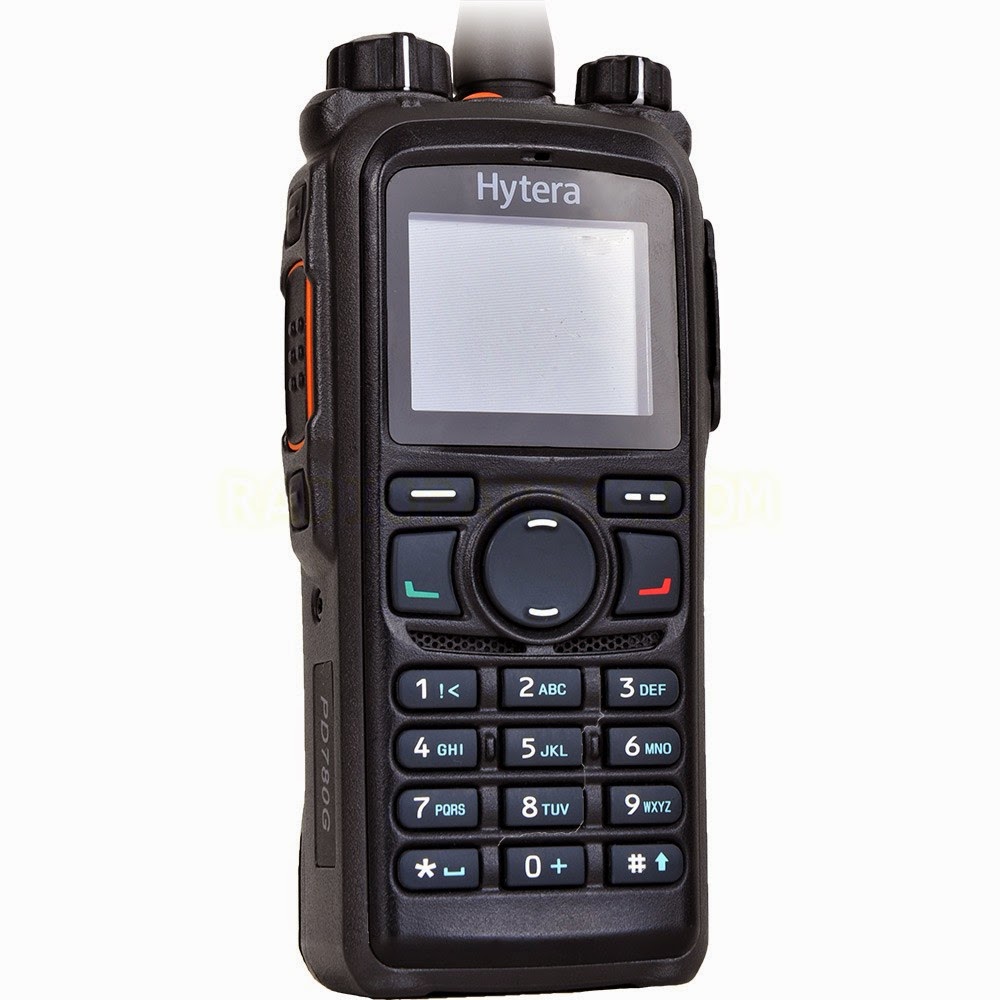
Hytera are the fastest growing radio country this year, they have opened offices all over the world and are taking market share from Motorola. When you look at their Hytera accessories, Chargers, repeaters, hand portables and base units they are of an excellent standard and quality. That is probably why the Dominican Republic was persuaded to use them for two big projects.

Hytera, a world leading solution provider of Professional Mobile Radio communications, was awarded two projects by the Ministry of the Presidency of Dominican Republic. In order to establish a nationwide emergency response network for National Emergency Care System and Security 9-1-1 (Sistema Nacional de Atención a Emergencias y Seguridad), Dominican Republic government selected TETRA (Terrestrial Trunked Radio) technology for mission critical communications, and launched two public tenders at the end of 2015; one is to cover two cities, Haina and San Cristobal, adjacent to the capital city Santo Domingo, with 5 sites and 528 terminals, while the other is to cover Santiago, the second largest city of the country, with 30 sites and 2,155 terminals.

The existing TETRA network in the Santo Domingo area was delivered also by Hytera as a result of a contract awarded by Dominican Republic's Ministry of the Presidency in 2013. The project includes several components: the 911 system, a camera surveillance system and the communications infrastructure with its respective terminals which was awarded to Hytera. “The system in Santo Domingo offers reliable communication services to the public safety forces, and it is a very good testimony of Hytera’s solutions and supports,” said Fernando Camelo, regional director of Hytera international business.

“Dominican Republic government officials have spent a lot effort to choose the right technologies for its public safety forces. Obviously, TETRA has been widely adopted and proved. We are proud to be part of the initiative of building a united nationwide mission critical communication system for the country,” commented Ming Kam Wong, deputy general manager of Hytera international business.

The TETRA digital standard as a global open protocol provides secure, encrypted communications for mission critical operations as well as promoting a more efficient use of spectrum. More than 750 interoperability (IOP) certificates have been awarded to more than two dozen manufacturers by the TETRA + Critical Communications Association (TCCA), the governing body, globally, for the TETRA standard.


Source - http://www.businesswire.com/news/home/20160912005706/en/Hytera-Awarded-Multi-Million-Dollar-Contracts-Dominican

Hytera Awarded Multi Million Dollar Contracts in Dominican Republic

Hytera are the fastest growing radio country this year, they have opened offices all over the world and are taking market share from Motorola. When you look at their Hytera accessories, Chargers, repeaters, hand portables and base units they are of an excellent standard and quality. That is probably why the Dominican Republic was persuaded to use them for two big projects.

Hytera, a world leading solution provider of Professional Mobile Radio communications, was awarded two projects by the Ministry of the Presidency of Dominican Republic. In order to establish a nationwide emergency response network for National Emergency Care System and Security 9-1-1 (Sistema Nacional de Atención a Emergencias y Seguridad), Dominican Republic government selected TETRA (Terrestrial Trunked Radio) technology for mission critical communications, and launched two public tenders at the end of 2015; one is to cover two cities, Haina and San Cristobal, adjacent to the capital city Santo Domingo, with 5 sites and 528 terminals, while the other is to cover Santiago, the second largest city of the country, with 30 sites and 2,155 terminals.

The existing TETRA network in the Santo Domingo area was delivered also by Hytera as a result of a contract awarded by Dominican Republic's Ministry of the Presidency in 2013. The project includes several components: the 911 system, a camera surveillance system and the communications infrastructure with its respective terminals which was awarded to Hytera. “The system in Santo Domingo offers reliable communication services to the public safety forces, and it is a very good testimony of Hytera’s solutions and supports,” said Fernando Camelo, regional director of Hytera international business.

“Dominican Republic government officials have spent a lot effort to choose the right technologies for its public safety forces. Obviously, TETRA has been widely adopted and proved. We are proud to be part of the initiative of building a united nationwide mission critical communication system for the country,” commented Ming Kam Wong, deputy general manager of Hytera international business.

The TETRA digital standard as a global open protocol provides secure, encrypted communications for mission critical operations as well as promoting a more efficient use of spectrum. More than 750 interoperability (IOP) certificates have been awarded to more than two dozen manufacturers by the TETRA + Critical Communications Association (TCCA), the governing body, globally, for the TETRA standard.


Source - http://www.businesswire.com/news/home/20160912005706/en/Hytera-Awarded-Multi-Million-Dollar-Contracts-Dominican

Hytera Awarded Multi Million Dollar Contracts in Dominican Republic

Hytera are the fastest growing radio country this year, they have opened offices all over the world and are taking market share from Motorola. When you look at their Hytera radio earpieces, Chargers, repeaters, hand portables and base units they are of an excellent standard and quality. That is probably why the Dominican Republic was persuaded to use them for two big projects.


Hytera, a world leading solution provider of Professional Mobile Radio communications, was awarded two projects by the Ministry of the Presidency of Dominican Republic. In order to establish a nationwide emergency response network for National Emergency Care System and Security 9-1-1 (Sistema Nacional de Atención a Emergencias y Seguridad), Dominican Republic government selected TETRA (Terrestrial Trunked Radio) technology for mission critical communications, and launched two public tenders at the end of 2015; one is to cover two cities, Haina and San Cristobal, adjacent to the capital city Santo Domingo, with 5 sites and 528 terminals, while the other is to cover Santiago, the second largest city of the country, with 30 sites and 2,155 terminals.

The existing TETRA network in the Santo Domingo area was delivered also by Hytera as a result of a contract awarded by Dominican Republic's Ministry of the Presidency in 2013. The project includes several components: the 911 system, a camera surveillance system and the communications infrastructure with its respective terminals which was awarded to Hytera. “The system in Santo Domingo offers reliable communication services to the public safety forces, and it is a very good testimony of Hytera’s solutions and supports,” said Fernando Camelo, regional director of Hytera international business.

“Dominican Republic government officials have spent a lot effort to choose the right technologies for its public safety forces. Obviously, TETRA has been widely adopted and proved. We are proud to be part of the initiative of building a united nationwide mission critical communication system for the country,” commented Ming Kam Wong, deputy general manager of Hytera international business.

The TETRA digital standard as a global open protocol provides secure, encrypted communications for mission critical operations as well as promoting a more efficient use of spectrum. More than 750 interoperability (IOP) certificates have been awarded to more than two dozen manufacturers by the TETRA + Critical Communications Association (TCCA), the governing body, globally, for the TETRA standard.

Source - http://www.businesswire.com/news/home/20160912005706/en/Hytera-Awarded-Multi-Million-Dollar-Contracts-Dominican