Friday, November 6, 2015

Commonwealth countries adopt action plan towards achieving consensus ahead of WRC15

Commonwealth countries adopt action plan towards achieving consensus ahead of WRC-15 - CTO: Commonwealth Telecommunications Organisation

Commonwealth countries taking part in the group of nations’ preparatory meeting last week in London ahead of the forthcoming 2015 World Radiocommunication Conference (WRC-15) have adopted an action plan towards achieving consensus at the international conference next month.

WRC-15, which will allocate new spectrum for radio communications, including for international mobile telecommunication (IMT) services will take place from 2 to 27 November 2015 in Geneva, Switzerland under the auspices of the International Telecommunication Union (ITU).

All regional groupsâ€"whose positions guide the WRC processâ€"include Commonwealth countries among their members. The London meeting which took place on 7 â€" 9 October 2015 was an opportunity for members of these regional groups to better appreciate the views and positions of other regions and help achieve greater consensus.

Chaired by Anil Kaushal, Member of the Board of the Telecommunications Regulatory Authority of India, the meeting elected a Bureau to coordinate the views of Commonwealth countries during the Conference next month. The Bureau includes Dr Edmund Katiti (Uganda) as the WRC Commonwealth Coordinator; representatives from Canada, India, Malaysia, Papua New Guinea, UK and the Caribbean as Vice-Coordinators; and Edmund Fianko (Ghana) as the WRC Commonwealth Rapporteur. Agenda Item Coordinators were also appointed.

Sharing his satisfaction at the end of the three-day meeting, the CTO’s Secretary-General Shola Taylor said he was satisfied that “this meeting has helped to better understand the various positions by different regions, and has also highlighted areas where clarity was still required, and we are grateful to the ITU for its contributions throughout our discussions”.

Key outcomes of the London meeting include:


  • Strong support for identification of additional spectrum for IMT in most parts of the L band;


  • Resolve to protect digital terrestrial television in the UHF band;


  • Future studies on potential use of part of the S band for IMT;


  • Mechanisms to achieve consensus on the lower part of the C band taking into account the growing demand for mobile broadband and the needs of countries like in the Pacific which depend heavily on satellites;


  • Support for future studies for IMT above 6 GHz to accommodate 5G, excluding Ku and Ka satellite bands;


  • A mechanism for further engagement with various regions on the possible use of FSS for unmanned aircraft, taking into account aviation safety concerns;


  • Support for global harmonisation on Earth Stations on Mobile Platforms; and


  • Recognition of the importance and urgent treatment of global flight tracking taking into account studies in the Director’s report.


“For Commonwealth countries, this meeting gave a clearer sense of the likely outcomes of WRC-15, so we encourage our members to be proactive and contribute to deliberations in Geneva as efficient as possible,” Mr Taylor added.

Mario Maniewicz, Deputy to the Director of the Radiocommunication Bureau at the ITU gave the participants an overview of preparations for WRC-15, and also provided clarifications on WRC proceedings and rules that will guide the Conference.

Festus Daudu, Chair-Designate of WRC-15 who also took part in the London meeting said discussions were “very productive as they enabled countries represented to better understand all regional positions, and I would like to congratulate the CTO for taking this initiative.”

Private-sector operators such as Inmarsat, Avanti Communications Group, and Google, as well as mobile industry association GSMA also took part in the meeting to express interest in specific spectrum bands in pursuit of advancing global connectivity. The case for safeguarding spectrum resources allocated to broadcasting was made by the BBC who gave a tour of its extensive London production facilities to the participants at the meeting.

Representing the Telecommunications Authority of Trinidad and Tobago, Kirk Sookram, Executive Officer for Technical Service and Development also shared his satisfaction at the end of the event: “The meeting has given Caribbean participants a great opportunity to understand within a single forum the views of all other regions that have some of their members in the Commonwealth,” he said.

The initiative of the London pre-WRC-15 meeting by the CTO is part of a wider programme of activities to implement a specific mandate of Commonwealth ICT ministers at their meeting held in London in March 2014 to coordinate all ICT matters in the Commonwealth.

Earlier this week, less than a month after assuming office, Mr Taylor had met with Houlin Zhao, Secretary-General of the ITU in Geneva to discuss wider collaboration between the two organisations.

Wednesday, November 4, 2015

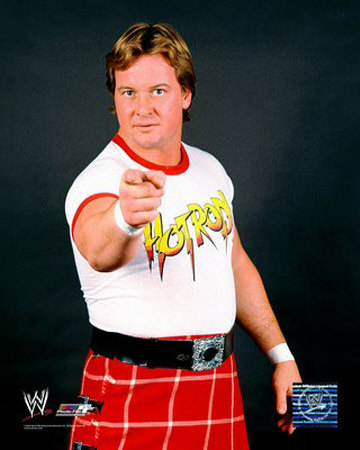
Wrestling Legend Rowdy Roddy Piper Dies At 61

The world of professional wrestling is in mourning following the death of the legendary Rowdy Roddy Piper last month. Piper suffered a cardiac arrest whilst at his home in Hollywood, California. He was just 61 years old.

For many kids (including myself) that first became fans in the mid-late 1980’s, Roddy Piper was the definitive wrestling heel (industry jargon for a bad guy). Whether hosting his notorious Piper’s Pit segment, or facing off against Hulk Hogan & Mr. T (with partner Mr. Wonderful Paul Orndorf) at the inaugural WrestleMania event, Piper was one of the industry’s biggest starts during one of its most popular and lucrative periods.

He was also instrumental in making the WWF (now WWE) brand the biggest in professional wrestling. In addition to headlining the very first WrestleMania event (a pioneering Pay-Per View extravaganza that could easily have ruined the company had it proved to be a failure), Piper also featured in one of WrestleMania II’s three main event matchups, thus securing his position as one of wrestling’s most bankable stars.

His undercard matches at WrestleManias III, VI and (the stone cold classic against Bret The Hitman Hart at) VIII are absolute highlights of a classic era of pro wrestling. He even acted as a guest referee for the main event of Bret Hart vs. Yokozuna at WrestleMania X. Younger fans, however, will undoubtedly remember Piper teaming with fellow veterans Ricky Steamboat and Jimmy Superfly Snuka to face Chris Jericho at WrestleMania XXV.

In an era defined by outlandish babyface characters with bodybuilder physiques and sometimes questionable in-ring abilities, Roddy Piper stood out as a genuine wrestler’s wrestler, an authentic tough guy - and the necessarily evil counterpoint to the simplistic, superheroic good guys being featured at the time by the WWF.

Born in Saskatoon, Saskatchewan, Canada in 1954, Roderick Toombs was always an unruly personality. Expelled from school at a young age and subsequently falling out with his father, (a member of the Royal Canadian Mounted Police) Toombs hit the road, staying in various youth hostels and earning a buck wherever he could. Eventually, the tempestuous youth wound up in a wrestling ring, making his in-ring debut at the tender age of just 15-years-old.

The kid was tough (he had a Black Belt in Judo), displayed a natural affinity for the ring and he had a roguish charisma all of his own. In addition, he really could play the bagpipes. After early stints jobbing in Verne Gagne’s AWA, NWA Houston and Fritz Von Erich’s Big Time Wrestling promotion in Dallas, Texas, Piper debuted for Mike and Gene LeBell’s NWA Hollywood promotion and soon became the outfit’s top heel. A slew of regional Championships followed.


Whilst working for promoter Roy Shire in the NWA’s San Francisco territory, Piper developed his character and ring work. In Los Angeles, he feuded with Chavo Guerrero Sr, Hector Guerrero and ultimately locked up against their father, Mexican wrestling legend Gory Guerrero (father of future WWE Champ Eddie). In The Pacific Northwest, he unseated former NWA World’s Heavyweight Champion Jack Brisco for Mid Atlantic’s version of the World Heavyweight Championship, a title he would go on to hold twice more.

In the mid 1980’s, Piper entered Vince McMahon’s insurgent WWF. He was billed as being from Glasgow, Scotland and was well known for being the only wrestler to wear a kilt to the ring. Fans ate it up. Feuding with such stars as Hulk Hogan, Adrian Adonis, Andre The Giant, Jimmy Superfly Snuka, Million Dollar Man Ted DiBiase, Jerry The King Lawler and Bret Hitman Hart, to name but a few, Piper always brought out the best in his opponents and it was with the WWF that he became a household name, as well as one of the industry’s biggest ever stars.

In the mid-1990’s, Piper wrestled for WCW (World Championship Wrestling), where he debuted as one of the company’s headline stars. He feuded, once again, with Hulk Hogan and also battled old rivals such as Ric Flair, Bret Hart and ‘Macho Man’ Randy Savage. Whilst working for WCW, he was even chosen to headline ‘Starrcade’, the company’s flagship Pay-Per-View event.

In his later career, Piper made sporadic reappearances for the WWE, briefly worked for TNA, enjoyed a reasonably successful acting career and also hosted his own podcast. He battled Hodgkin’s Lymphoma after being diagnosed with the illness in 2006, but had completely beaten it into remission as of last year. Despite the setbacks caused by his ill health, Piper wrestled his last match in 2011.

Although he never held a recognised World Heavyweight Championship, Piper will be remembered as one of the greatest WWF Intercontinental Champions of all time, a reign that was attested to during his appearance at this year’s WrestleMania XXXI, where he congratulated then-IC Champion Daniel Bryan on his victory. He also held other notable belts, such as the United States Championship, the WWF/E Tag Team Championship (with Ric Flair) and the NWA World Light Heavyweight Championship.

Piper was a member of the WWE Hall of Fame and the Wrestling Observer Hall of Fame, as well as the Professional Wrestling Hall of Fame. He was also a member of the Cauliflower Alley Club.

On the August 3rd edition of RAW, the entire WWE roster, each member clad in Roddy’s signature Hot Rod t-shirts opened the show with a very moving ten bell salute in tribute to the fallen legend.

WWE boss Vince McMahon said, "Roddy Piper was one of the most entertaining, controversial and bombastic performers ever in WWE, beloved by millions of fans around the world. I extend my deepest condolences to his family."

UFC Bantamweight Champion Rowdy Ronda Rousey dedicated her 34-second victory over Bethe Correia to Piper’s memory, "I just want to say that we lost a really close friend, Rowdy Roddy Piper, who gave me permission to use his name as a fighter (...) And so I hope him and my dad had a good time watching this today."

Former WWE and WCW Champion (and Piper’s frequent in-ring rival) Bret Hart wrote, “I can’t find the words to describe the sorrow in my heart upon learning the news of my dear friend, Roddy Piper, passing away. He was my closest friend in the business, a man that schooled me and guided me throughout my career. In fact, if it wasn’t for Roddy Piper reaching out to help me, I’m sure I would’ve been a mere footnote in wrestling. He was always there for me. He was family to me.” Hart also recalled that, following his stroke in 2002; Piper was the only wrestler who visited him in hospital.

Hulk Hogan, another of Piper’s famous adversaries, said of Piper that, “He was my best friend. He is a legend. God’s gain is our loss. May his family in this time of need, find peace"

Other friends, colleagues and admirers of Piper’s included former WWF Champ The Iron Sheik, who said “Roddy Piper. I love you forever. God bless you Bubba” and multi-time World Champion Chris Jericho Tweeted, “Sorry to hear of the passing of my friend and Wrestlemania rival #RoddyPiper. One of the greatest who ever lived, but more importantly a legit sweet family man with a good heart”. Former WWE Divas Champion Paige called Piper a “legend” and Tweeted a picture of a broken heart, an image which reflected the feelings of many a wrestler and wrestling fan.

Roddy’s son, Colt, said that his father was his “best friend” and a “great man” saying that he would miss him forever and “always try to be the man he raised me to be”.

Rowdy Roddy Piper lived a life littered with accomplishments. Not many of us will ever be declared as legendary by our peers and fewer still will be able to stack 30+ Championship reigns anywhere on our resume, but those weren’t the man’s proudest achievements. Piper had been married to his wife, Kitty, since 1982 and is survived by her and the four children they lovingly raised together. My thoughts are with them, as well as everyone else who knew, worked with, or simply enjoyed to watch the late, great man work his magic in front of a capacity crowd. R.I.P Roddy.

Monday, November 2, 2015

Sepura: Market-leading communications solutions for hazardous environments

Our complete TETRA solutions for hazardous environments provide loud, clear, safe communication in the toughest conditions, and are custom designed to meet the challenges typically found in mining, maritime and oil and gas environments.

When compared to analogue, NXDN, proprietary and GSM radio based systems, TETRA offers increased functionality and, crucially, higher data throughput for telemetry and data applications.

Fully certified to the highest level

The STP8X range is IECEx/ATEX certified - the highest level of classification available for Intrinsically Safe radios. The first IP67, submersible, TETRA Intrinsically-Safe radio on the market, the STP8X handheld radio has a host of unique features:


  • market-leading audio for clear communication even when drilling or excavating


  • large, hi-resolution display: crystal clear in all conditions, including bright sunlight


  • MicroSD image viewer - ideal for looking up hazardous material data


  • extended battery life


  • reduced keypad option for use with gloved hands


A comprehensive range of IECEx/ATEX certified accessories is also available.

The complete solution

We offer a full suite of extensively tested and certified products to complement our STP8X IS range and enable confident working in challenging conditions.

The high performing eXTRAS Solo TETRA base station has been specifically designed to meet the demands of industrial organisations. Offering low power consumption, it can be configured to automatically reduce or shut down RF power output in an emergency situation.

The SICS-NET TETRA dispatcher allows operators to track vehicles and personnel, visualise location via building and street maps, and communicate efficiently through a combination of voice and data. Man-Down and Lone Worker emergency notifications further ensure worker safety in potentially hazardous conditions.

The Message application allows email, SMS and SDS messages to be received on IS radios, removing the risk of workers covertly carrying non-IS devices such as smartphones into hazardous areas.

STProtect, the only TETRA-based integrated lone worker protection and indoor location system on the market, maps to user-supplied building plans, allowing control of access to restricted areas and swift location of staff members - particularly useful in an emergency. Fully scalable, STProtect is also compatible with our Man-Down and Lone Worker solutions, further enhancing user safety.

You can find sepura products at http://www.sepura.com and you can find this original article at yourcommunicationnews.com. 

Friday, October 30, 2015

THE USAGE OF WALKIE TALKIES RADIOS IN THE HOTEL INDUSTRY

In the hospitality business, improving customer service, increasing staff productivity as well as enhancing efficiency is always believed to be a winning strategy. One of the surest ways of streamling operations in the hospitality business is by ensuring your team is well equipped with better ways of communication. Two way radios are cost-effective, easy-to-use as well as a proven solution that can be very effective in optimizing efforts in food service, customer service, housekeeping, engineering, maintenance, valet, security and transportation as well.

The level of success that you can achieve in your hotel basically relies on the fundamental brickwork that you lay down for your hospitality business. These fundamentals include exceptional customer service, attention to detail, and rapid responses to your customers' needs. Whether your hotel staff members are responding to the guest requests or the concierge team is communicating with one another other, Two way radios are proven to offer the best functionality. With clear audio systems and quality handsets, these 2 way radios are capable of helping staff members improves their efficiency and productivity.


Quick, discreet and efficient communication strategies should be the main priorities for any businesses within the leisure and hospitality sectors. Small hotels, guest houses, health clubs and small leisure operations are well-suited to analogue Two way radios. In such businesses, Two way radios are needed to pass any form of information between many staff members, get updates of conditions in different areas of the business or even monitor activities within the premises. In addition to supplying analogue Two way radios to various businesses, 2wayradionline.co.uk also supply waterproof radios for different swimming pool areas or specially toughened 2 way radio models for outdoor activity centres.

Large hotels and leisure complexes like the golf courses and gyms usually require digital 2 way radio systems, which are capable of working over greater distances. The need to install complex digital systems to enhance radio coverage only arises if the distances are very large or there is a lot of concrete (for instance high-rise hotels). In a bid to keep Two way radios unobtrusive especially at corporate events and in public, the use of earpieces can make radio communications covert and help keep sensitive information out of public knowledge. Added benefits can include incorporating building management intelligence into the radio system; for instance a message can be sent to the control centre automatically when any given lift breaks down or the fire alarm is triggered.

Accommodating a lot of guest can leave you with a lot of things to do and coordinate. All this can be made quite easy on your part and that of your hotel staff members through the integration of hotel-based Two way radios into your workflow. Having Two way radios in your hotel can smooth your path to guest satisfaction. In addition, it allows you to build a great customer loyalty base as it allows your staff members to present a professional image which is backed by a rapid response to any guest requests.

Digital and Analogue 2 way radios are already in use at some of the most exclusive and largest hotels, resorts and casinos all over the world. The digital and analogue 2 way radios and systems used in these resorts, hotels and casinos to keeps the guests feeling safer and also significantly enhance customer satisfaction and operational efficiency. For instance, the management of your hotel can make sure that the housekeeping department is capable of prioritizing the type of rooms that are meant to be prepared first which in turn helps housekeeping departments to contact stores and laundry for additional guests’ amenity kits, linen and so on. The same also applies to the safety and security within the hotel building and its grounds, so in the event of security breaches or in emergency situations where safe and fast movement of a large number of people will have to be managed. With Two way radio stations installed in your hotel buildings, you will be able to enhance the security of all your guests as well as staff in case of any emergency situation that arises

Two Way Radios For The Construction Industry

The use of Two way radios on a construction site is the best way to achieve efficiency by saving time, increasing productivity, and enhancing workers’ safety. A Two way radio device allows workers on a construction site to communicate with each other instantly. The radio is incredibly instrumental where the site manager has to communicate to hundreds of workers spread across a large contraction site. On a construction site, workers are always moving around carrying heavy loads and operating machinery. The working environment requires heavy-duty communication devices such as the Two way radio models. The radio ought to have the same specifications as the radio military personal. These features include shock resistant, water, and dust resistant to guarantee durability for up to 10-15 years. These specifications ensure that the device can operate in harsh environments without spoiling.

A construction manager may need to reach out to workers on a crane, up a sky-scrapper, management office, and security personnel on site using a single network. The Two way radio enables construction workers to communicate over all these possible barriers and achieve clarity and reliability in communication. Whether, it is rainy or windy, the Two way radio will deliver top-notch communication efficiency. The noisy construction environment does not affect the clarity of the 2 way radios.

The Two way radio helps improve the safety of workers while on a site. The radio can make emergency calls in explosive environments such as places with combustible dust or even flammable gas. The radio has an emergency alert features that sends instant distress calls, even when a worker is unconscious. For instance, Man Down features sends an automatic alert if a worker falls or the device stays in a horizontal position for a long time. There is also the Lone man function that ensures any worker isolated, in case of an emergency, has special communication options. During emergencies the radio adjusts its system by interrupting group conversations to allow the distress call to go through to the control centre. Such a function is critical to a situation where a worker is alone and in trouble.


Using the Two way radio guarantees a reduction in both operation cost and delays. Radio communication ensures that construction managers can pass urgent messages quickly to the different departments working on a site. If there are any changes in the course of the day, the manager does not have to call for a meeting or wait until close of business to communicate. The Two way radio offers the perfect speed to communicate changes during construction work. The technology also saves on the cost of paying cellular charges if the company is using a mobile network to communicate on the site.

Most radios comes equipped with GPS tracking that aid both security and efficiency. Site managers are able to locate the position of all workers using the communication device. Making it possible to track the movement of vehicles on site and the position of equipment such as forklifts, backhoes, and excavators. The GPS tracking functions also helps construction managers to improve on-site security by identifying where their equipment is. Since most construction workers will use a Two way radio device, communication is sure to improve deliveries to and from the construction site. In case of a vehicle breaking down, the control room can receive the messages and arrange for support without wasting time.

The flexible nature of the 2 way radio network accommodates construction sites of different sizes. Whether it is a large construction company, a medium sized company, or a small contractor the 2 way network delivers. A big construction company can enjoy the increased calling ability using a single network. If multiple sites use the device, it is possible to have an integrated system that shares the same network but does not allow for interferences. The small contraction company can use a few radios on the single network and cut on cost . Therefore, it is possible to employ the services of the communication devices in different circumstances. Construction managers today are aware of the need for good communication in their sites. An efficient communication network ensures that everyday work is stress-free for the managers and the supervisors.

Friday, October 23, 2015

Idiot In Venezuela Mutilates Himself In Order To Look Like Marvel Comics Villain

Created by writers Joe Simon and France Herron, together with artist Jack ‘King’ Kirby, Marvel Comics’ ‘Red Skull’ character first appeared as an antagonist for Captain America in 1941.

An unreconstructed Nazi supervillain, Red Skull’s plans post-1945 typically centred around world domination, the clever application of his ‘Cosmic Cube’ weapon and a membership in the evil organization ‘Hydra’.

As a result, he has been a popular antagonist in Marvel comic books for several decades and was even selected to be the main enemy of Captain America for the 2011 movie ‘Captain America: The First Avenger’.

One of the most unrepentantly evil Marvel Comics villains, Red Skull isn’t a tortured political idealist like Magneto, or the product of a lousy upbringing like Doctor Octopus. He’s just a Nazi douchebag, plain and simple.

...And now, Henry Damon, a husband and father from Venezuela, has mutilated himself in order to look like him.

How?

Well, he apparently has an appointment booked to have his entire head tattooed red.

Plus, he’s already had his eyeballs tattooed entirely black (which, I have to say I didn’t know was possible) and he has even had sub dermal implants placed under his skin so that his brow and forehead appear ridged and more ‘skull like’.

Next up, he’ll have silicon implants placed under his chin and his cheeks, which will give him the broad, skull-like grimace of the comic book character.

...But by far the most wince-inducing aspect of Mr. Damon’s transformation is that he has recently had most of his nose cut off.

The surgery was performed by Emilio Gonzales (you’ll not the absence of the word ‘doctor’ anywhere in that title), a medical school dropout who earns a living from extreme body modification. In response to critics, Gonzales has said that Damon is “physically and intellectually” a healthy person.

No joke. He really did say that.


OK, so this guy wants to be a Nazi supervillain. In fact, he wants to be a Nazi supervillain so badly that he’s willing to endure no small amount of pain (and spend what is probably a small fortune) on mutilating himself unrecognizably in order to achieve his goal of becoming a Nazi Supervillain from a comic book.

...Yeah, because that’s healthy.

Instead of being offered the psychiatric treatment he obviously needs, Damon apparently passed a number of ‘psychological tests’, but honestly, I can’t imagine any credible, certified psychiatric professional agreeing with that diagnosis, can you? More likely it was the ‘surgeon’, asking him to fill out a few forms in order to cover his ass in case of a lawsuit.

Whatever the reason behind this insanity, there are a great many jokes to be made about this particular idiot. Firstly, if he has no nose, how does he smell? Secondly, he’s cut off his nose to spite his face...And so on.

Joking aside, the really stupid thing is that once this idiot is done mutilating himself, he won’t even own the rights to his own face anymore.

Also, I sincerely hope that he never catches a cold...But that’s more out of concern for the rest of the community than it is for Mr. Damon.

Thursday, October 22, 2015

Boys From The Dwarf: Classic Sci-Fi Comedy Show To Return For Two New Series

The boys from the Dwarf are back! UK TV channel Dave has announced that it has commissioned two new series of the long-running science fiction comedy, the first of which (series XI) will be set to air in 2016.

Series co-creator Doug Naylor, who has been in sole charge of the franchise since 1997’s seventh series, said, "[We were] originally asked for more shows back in 2012 (...) but frustratingly it’s taken until now to get our ducks in a row and all the boys available at the same time. Now they are, we’re all absolutely delighted."

Craig Charles, who portrays Dave Lister on the show, has reportedly left his long-running role as Lloyd Mullaney on British soap opera ‘Coronation Street’ in order to better commit to the part.

"Lloyd has become a huge part of my life and I’ve had an absolutely fantastic ten years," the poet-turned actor told Empire Online. "...But I feel I owe it to my colleagues on Red Dwarf to join them in filming the new series and finding out what is in store for Lister and the others."

The BBC initially aired 8 series of Red Dwarf from 1988 â€" 1999. From there, Dave optioned the rights to the series and produced a three-part special entitled ‘Red Dwarf: Back To Earth’ in 2009. Fan reaction to this new series was mixed and many saw it as a creative miss-step. However, both viewing figures and DVD sales for the specials were strong and so Dave commissioned a new series, ‘Red Dwarf X’ in 2012. This time around, with the characters returning to the original ‘sit-com in space’ format, the fan reaction was much more positive, which left many fans hungry for more.

Although the viewing figures for Series X were not as strong as they were for the ‘Back To Earth’ specials, the series was still Dave’s highest rated show of 2012.

Since then, however, it’s been a long wait. Having said that, three years between series is nothing for fans of Red Dwarf. After Series III wrapped in 1989, fans had to wait until 1991 for Series 4. Then, after Series VI ended (on a cliffhanger, no less), viewers had to wait four years until Series VII kicked off in 1997. Two years passed before 1999 saw the release of Series VIII and from there it was a decade before Dave aired the three part special, ‘Red Dwarf: Back To Earth’. Even after that venture proved to be (financially, if not entirely critically) successful - it was still three more years before fans saw any new episodes coming their way.

The two new series will be shot back-to-back towards the end of this year and are being co-produced by Baby Cow Productions. Welcome back, Dwarfers, the slime’s coming home!